Swiss humanoid startup Embodie AI unveils AIR after 9 months and reports 98% on a factory test
Swiss robotics company Embodied AI has introduced AIR, a wheeled industrial humanoid built to work beside people on factory floors. The EPFL spin-out says the machine was developed in 9 months and is already on trial with manufacturers.
Key takeaways
- Embodied AI unveiled AIR on 6 November 2026 in Munich, 9 months after work on the industrial humanoid began.
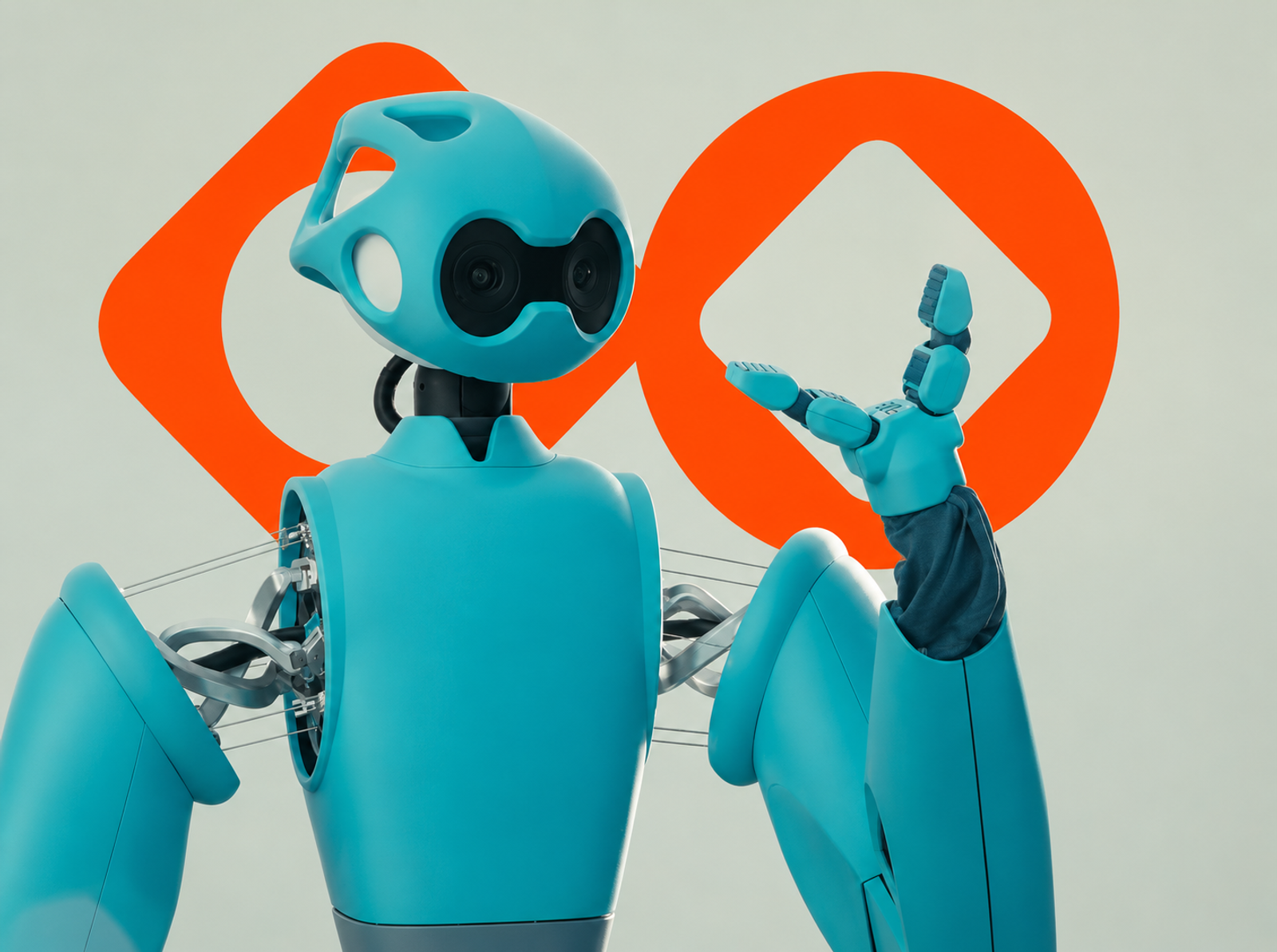
- Heavy parts sit in the torso, and tendon-driven arms are built to yield on contact. The robot rolls on wheels rather than walking.
- The company reported 98% reliability, against a 90% target, on a cable-handling evaluation of its existing two-arm industrial cell. That result does not describe AIR.
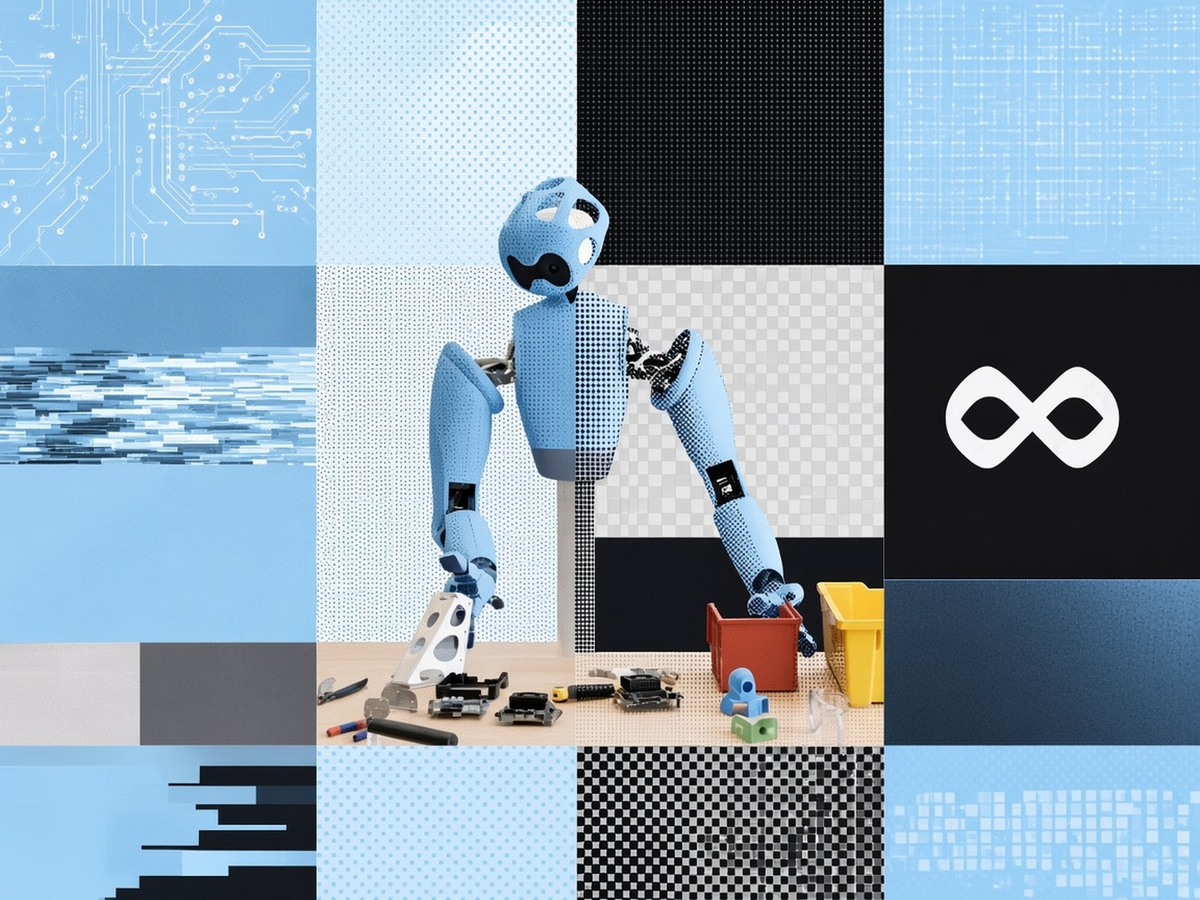
Swiss robotics company Embodied AI has unveiled AIR, an industrial humanoid designed to work beside people on factory floors.
The Lausanne-based EPFL spin-out presented the robot on 6 November 2026 in Munich. It says development took 9 months, and that AIR is already being tested with manufacturers. The company also said it has signed contracts with large producers and has started planning production at a larger scale.
What this industrial humanoid is built to do
AIR is aimed at repetitive manual work that changes too often for fixed factory machines. The company points to jobs that need precise hand movements, such as handling cables, where the layout of parts is rarely the same twice.
The robot begins each new task under a person's control, so it can be useful from the first shift. Those demonstrations are recorded. Embodied AI's software then learns the work until the robot can carry it out on its own, which the company said usually takes about a month, depending on the job.
A person stays available for situations the robot has not seen. Skills learned by one unit can be copied to others in the fleet.
That learning method is intended to travel with the software onto the new industrial humanoid, rather than forcing each factory to program AIR from scratch.
How the industrial humanoid is built to give way
The design puts motors, gearboxes and electronics in the torso. Tendons move the arms, which carry little mass of their own and give way if they bump into something or someone.
The company said this physical compliance is the main safety feature, rather than software limits alone. AIR follows ISO/TS 15066:2016, the technical specification for collaborative industrial robots. A CE mark is planned for 2027.
AIR rolls on wheels. Embodied AI said factory floors are flat, and a wheeled base is more stable than legs. That choice also avoids the risk of a bipedal robot falling over beside workers.
Leadership on the launch
Francesco Stella is co-founder and chief executive of Embodied AI. He completed a doctorate in robotics and AI at EPFL, the Swiss Federal Institute of Technology in Lausanne, where the arm design began. He has also carried out research at MIT's Computer Science and Artificial Intelligence Laboratory.
Stella founded the company with chief technology officer Kai Junge, who holds a doctorate in robotic manipulation from EPFL, and chief operating officer Max Polzin, who trained at ETH Zurich and EPFL and earlier helped grow Seervision through to its sale.
Stella said, "Hallucination of AI models is acceptable in the digital space because humans review, reject, or correct the output before acting on it. In robotics, however, incorrect actions have immediate and irreversible physical consequences."
The 98% result belongs to an earlier machine
Embodied AI already sells a separate two-arm industrial cell, and the same software runs in paid factory installations of that system.
A leading consumer electronics manufacturer asked several funded start-ups to handle cables as a test. Embodied AI said it reached 98% reliability, compared with the customer's 90% target, and that the other companies in that evaluation did not meet the customer's targets. Those figures describe the company's software and two-arm cell, not a published trial of AIR itself.
The customer has not been named, and no independent report of the test has been released.
Why factories are looking at this kind of industrial humanoid
Manufacturers still struggle to fill skilled roles. Deloitte and The Manufacturing Institute estimated in 2024 that US factories could need as many as 3.8 million extra workers between 2024 and 2033. They also said 1.9 million of those jobs could remain empty if skills and hiring gaps are not closed.
Embodied AI argues that an industrial humanoid can take on dull, changing manual work so people can spend more time on jobs that need judgement. The company is based in Lausanne and has an office in Rome.
Its first funding round was led by Faber, with Techshop Capital, Look AI Ventures, Plug and Play and Vento also backing the start-up. The amount raised has not been disclosed.
What comes next
AIR is in trials, not yet in large-scale production. Embodied AI has not named the manufacturers testing it, nor said when the first units will enter regular factory use.
The next public markers are the planned CE mark in 2027 and any move from trials into volume manufacturing.
Mentioned Embodied AI
The event
AUTONOMOUS 2027
The conference behind this reporting. Two stages of founders, engineers and investors building robotics and physical AI, in one room for a day.