Genesis AI raises $500M at a $3.5B valuation to put its humanoid, Eno, to work
Genesis AI has raised a $500 million Series A co-led by Premji Invest, Khosla Ventures and Eclipse. The Paris and San Carlos company will use the money to train its AI model on more human data and ramp up production of its robot, Eno.
Key takeaways
- Genesis AI has raised a $500 million Series A at a $3.5 billion post-money valuation.
- Premji Invest, Khosla Ventures and Eclipse co-led the round, joined by NVIDIA, AMD Ventures, Samsung Next and former Google CEO Eric Schmidt.
- The company will deploy Eno first in manufacturing, logistics and laboratories.
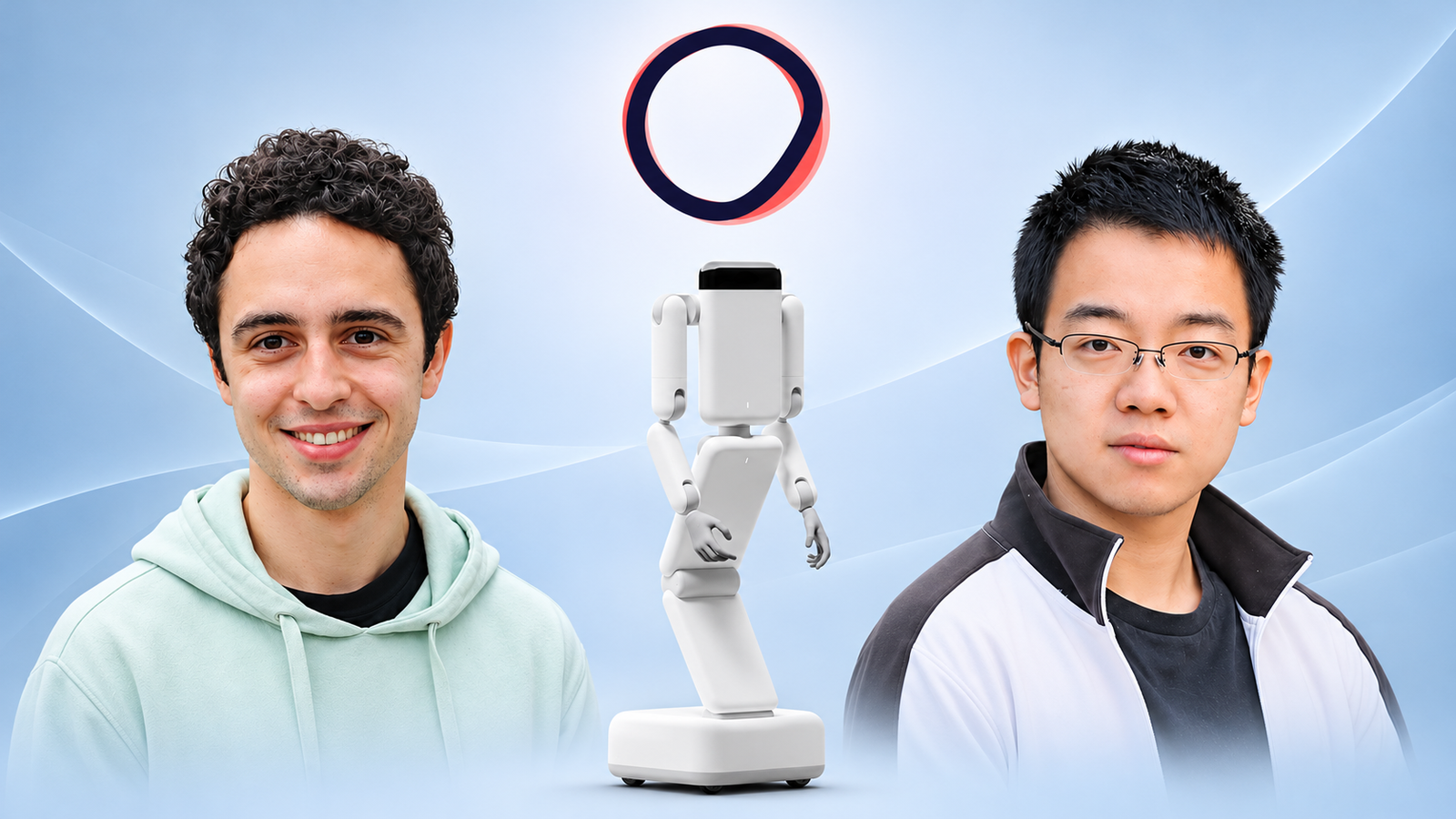
Genesis AI has raised $500 million in Series A funding to scale Eno, the general-purpose robot it builds alongside its own AI model, robot hand and simulator.

The round values the company at $3.5 billion after the investment. Genesis announced the deal on 17 November 2026 from its bases in Paris and San Carlos, California.
Who invested
Premji Invest, Khosla Ventures and Eclipse co-led the round. Durable Capital Partners, T. Rowe Price Associates, Bpifrance, HSG, NVIDIA, AMD Ventures, Zoom, Samsung Next and Ericsson also took part.
Individual backers include former Google CEO Eric Schmidt, Zoom CEO Eric Yuan, Yahoo! co-founder Jerry Yang, French entrepreneur Xavier Niel and former Tesla CFO Zach Kirkhorn.
The new money brings Genesis's disclosed funding to $605 million. It previously raised $105 million in a seed round announced in July 2025.
From research project to company
Genesis grew out of a research collaboration that Zhou started in 2022 while studying at Carnegie Mellon. The project brought together researchers from more than a dozen universities to build robotics simulation tools.
After finishing his PhD at the end of 2024, Zhou started the company with Théophile Gervet. Genesis then moved beyond simulation into AI software and hardware for a general-purpose robot of its own.
How the general-purpose robot learns
Genesis builds every layer of its system in-house. GENE is its AI foundation model, which the company says gives robots human-level skill when handling objects.
The second layer is a dexterous robot hand paired with a data-collection glove. The hand closely matches both a human hand and the glove, so robots can learn from data recorded while people wear the gloves during their normal work.
Genesis says this approach to training a general-purpose robot avoids the usual method of hiring operators to control robots remotely to gather training data.
Genesis World, the company's simulator, lets robots train and test skills across many virtual scenes before trying them in the real world. Eno is the robot that brings these parts together.
Genesis describes Eno as challenging conventional humanoid design, putting what a person can do ahead of how a person looks.
Leadership on the raise
Zhou Xian is co-founder and chief executive of Genesis AI. He earned a PhD in robotics at Carnegie Mellon University's Robotics Institute, where he led Genesis, an open-source physics simulator built with research labs from around the world. He holds an engineering degree from Nanyang Technological University in Singapore.
Zhou said, "Our mission is to remove the physical limits on human ambition. To accomplish this, we're working to build the world's best general-purpose robot, one that works reliably in the real world, day after day."
His co-founder, Théophile Gervet, also holds a PhD from Carnegie Mellon and previously worked as a research scientist at Mistral AI.
Vedant Agrawal is a partner at Premji Invest, where he leads the early-stage practice. He previously invested at Sequoia Capital India and holds an MBA from Harvard Business School.
Agrawal said what stood out was "watching Genesis robots complete long, multi-step tasks on their own at the same speed a person would."
Where the money goes
Genesis plans to expand data collection and large-scale training so its robots can take on a wider range of harder tasks. It will also hire more AI researchers, robotics experts and engineers.
The company is ramping up production of Eno for industrial customers. Manufacturing, logistics and laboratories come first, followed by hospitality and healthcare, then consumer and outdoor uses.
Genesis has announced a partnership with LG CNS. It is also exploring a rental model in which customers pay for the robot and its software as one service.
Robotics investment keeps climbing
Funding for robot makers has risen sharply this year. Global venture funding to robotics startups reached $9.9 billion in the third quarter of 2026, more than double the $4.3 billion invested a year earlier, according to Crunchbase data.
Demand on the factory floor is growing too. The International Federation of Robotics said 542,000 industrial robots were installed worldwide in 2024, and it expects annual installations to pass 700,000 units by 2028.
A general-purpose robot that can pick up new tasks from human demonstrations could reach parts of that market that fixed industrial arms do not.
What comes next
Genesis has close to 100 employees and plans to grow its computing power and robot output with the new funding. The next test is whether Eno can move from early customer work to steady deployment as a general-purpose robot at scale.
The event
AUTONOMOUS 2027
The conference behind this reporting: April 13-14, 2027 at Pier 27, San Francisco. Two days of founders, engineers and investors building robotics and physical AI.