Remedy Robotics raises $62M Series B to take stroke care remote
DCVC led a $62M round for Remedy Robotics, which is building the N1, a robotic system designed to carry out complete stroke and heart procedures on site or from a distant hospital.
Key takeaways
- Remedy Robotics raised $62M in a Series B led by DCVC, announced on 16 November 2026.
- The money funds a planned late-stage trial with the University of California and work toward FDA approval for neurovascular intervention.
- The N1 system is still in development and is not cleared for sale or clinical use anywhere.
San Francisco startup Remedy Robotics has raised $62M to develop its endovascular robot, the N1. DCVC led the Series B, the company announced on 16 November 2026.
The round lands as Remedy prepares its endovascular robot for the next clinical stage. The company said the capital will carry the N1 into a planned late-stage trial run with the University of California and toward FDA approval for neurovascular intervention.
What the endovascular robot does
Endovascular procedures treat blocked or damaged blood vessels from the inside. A doctor threads wires and catheters through an artery, often from the groin, to reach a clot in the brain or heart.
Remedy said only highly specialised physicians at a small number of hospitals can perform this work today. It said just 2.8% of eligible stroke patients worldwide can get endovascular treatment.
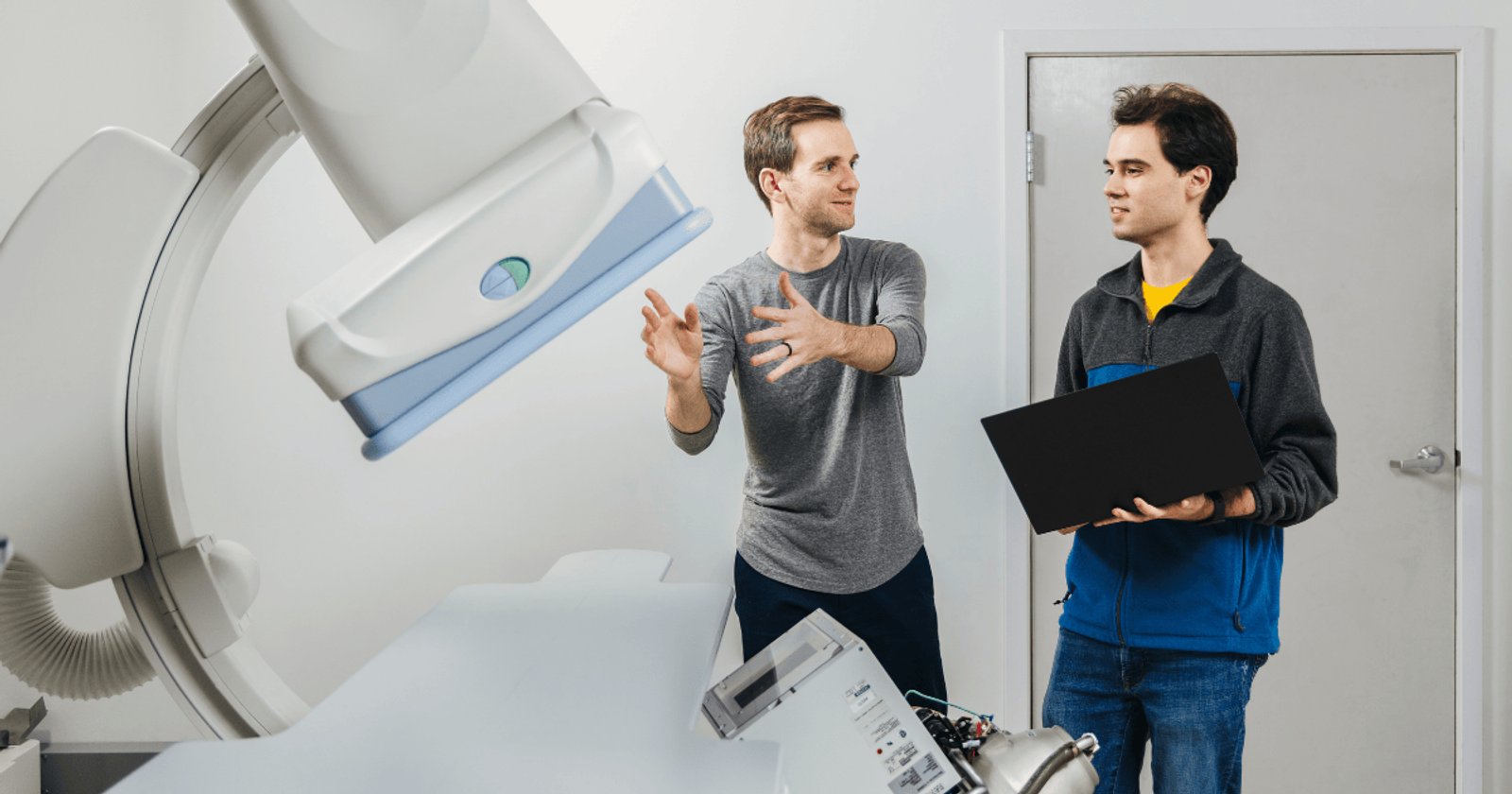
The N1 endovascular robot is built to carry out the whole procedure robotically. Remedy said the system can run with a doctor in the room, from another site or autonomously, across neurovascular, coronary and peripheral vascular care.
How the N1 uses machine learning
Before a case begins, Remedy's software reads the patient's CT and MRI scans and simulates the procedure. During the case, it matches live 3D and 2D images so the robot knows where its tools sit inside the vessels.
When the N1 was unveiled in October 2025, Remedy said the robot can control up to 4 tools at once. These include standard wires, microcatheters, stents and coils, plus the company's own catheters that steer through 360 degrees.
Clinicians drive the system from a portable console. Remedy said that console handles every tool, fluid control and audio and video links to the bedside team.
Remote procedures in Toronto
Remedy describes its Toronto cases as the world's first fully remote neurointerventional procedures. Dr. Vitor Mendes Pereira, a neurosurgeon at St. Michael's Hospital, operated from St. Joseph's Health Centre while his patients lay at St. Michael's.
Both hospitals belong to the Unity Health Toronto network. Unity Health said the sites are 6 kilometres apart and that the first cases, in late August 2025, were diagnostic angiograms in 2 patients.
Remedy said no interventionist was needed at the bedside. The hospital said a specialised bedside team supported each patient beside the robot.
Investors behind the endovascular robot
DCVC also led Remedy's seed round, according to our LinkedIn post. New backers in the Series B include UC Investments, the University of California's investment office, plus Skip Capital and Australian pension fund Hostplus.
Existing investors Build Collective by Tony Fadell, Blackbird, Divergent Capital and KdT Ventures all put in more money. Remedy did not disclose its valuation.
Leadership
Remedy is led by its 2 co-founders. Dr. David Bell is chief executive. He trained in cardiac surgery in Australia and was completing an MBA at Stanford when he met his co-founder in 2019, IEEE Spectrum reported.
Bell said, "Endovascular intervention is the gold standard treatment for stroke and many cardiovascular emergencies, yet access remains limited to a small number of hospitals."
Jake Sganga is chief technology officer. He holds a PhD in bioengineering from Stanford, where he worked on control software for autonomous surgical robots. He earlier consulted for surgical robotics firm Auris Health.
Sganga said the round lets Remedy push the N1 toward clinical trials "while also developing additional features including full autonomy."
James Hardiman is a general partner at DCVC, the round's lead investor. Hardiman said, "Remedy Robotics represents a new generation of medical robotics and physical AI companies, focused not only on technical innovation, but on solving real-world challenges."
Where the N1 goes next
Remedy said it works with more than 100 hospitals worldwide. It will place prototype N1 systems with clinical partners, including SVIN Mission Thrombectomy, which named Remedy its exclusive robotics partner.
The Australian Stroke Alliance is another partner. Remedy said it holds 48 patents and has been working with University of California clinicians since 2021.
A growing market for robots
An endovascular robot sits in a wider market for robots that is growing fast. The International Federation of Robotics (IFR) counted 542,000 industrial robots installed worldwide in 2024, more than double the figure a decade earlier.
The IFR put the number of robots in operation at 4.66 million in 2024, up 9% on the year before. It expects annual installations to pass 700,000 by 2028.
What comes next
Remedy has not given a date for the late-stage trial or a timeline for FDA approval. The N1 endovascular robot remains investigational and is not available for sale or clinical use in any jurisdiction.
The company has not said when the system's autonomous features will reach patients.
The event
AUTONOMOUS 2027
The conference behind this reporting: April 13-14, 2027 at Pier 27, San Francisco. Two days of founders, engineers and investors building robotics and physical AI.