Google DeepMind's Gemini Robotics 2.5 hits 96% in a Mercedes-Benz humanoid pilot
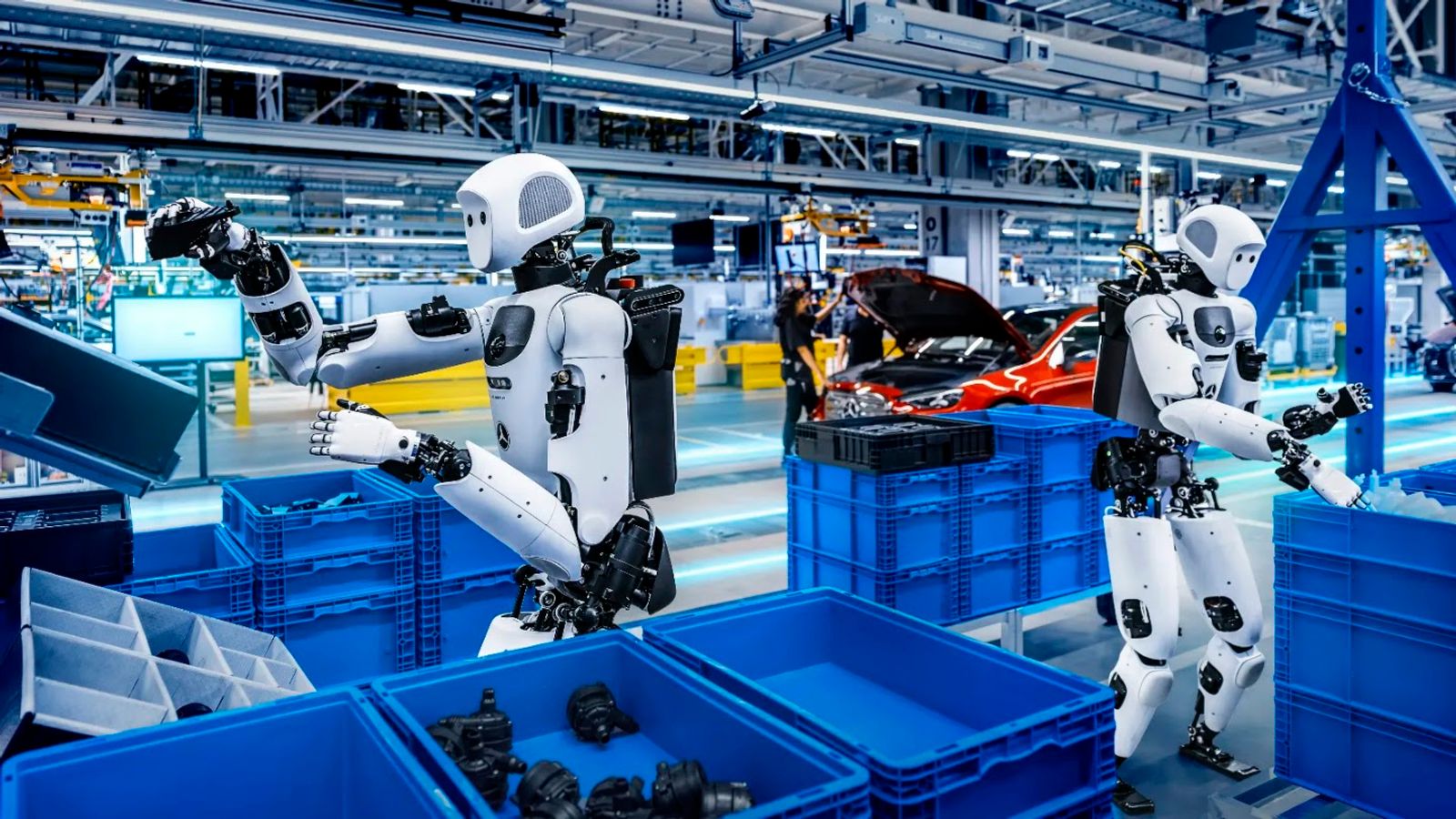
Google DeepMind has released Gemini Robotics 2.5, its most capable robot model so far, and tested it on Apptronik's Apollo 2 humanoid in two Mercedes-Benz plants. The robots sorted car parts for the line with a 96% success rate.
Key takeaways
- Google DeepMind introduced Gemini Robotics 2.5 on 10 November 2026 and is rolling it out to its robotics partners.
- Across more than 200 tasks, DeepMind reported success rates 30% to 100% higher than earlier baselines, with tasks done 20% to 30% faster.
- In a proof of concept at Mercedes-Benz plants in Hungary and Germany, Apptronik's Apollo 2 humanoid kitted car parts with a 96% success rate.
Google DeepMind has released Gemini Robotics 2.5, a vision-language-action model that turns what a robot sees and hears into movement. The company tested it on humanoid robots working on live Mercedes-Benz production lines.
DeepMind announced the model on 10 November 2026. It follows Gemini Robotics 2, which brought whole-body control to humanoids and other robots earlier this year.
What the vision-language-action model does
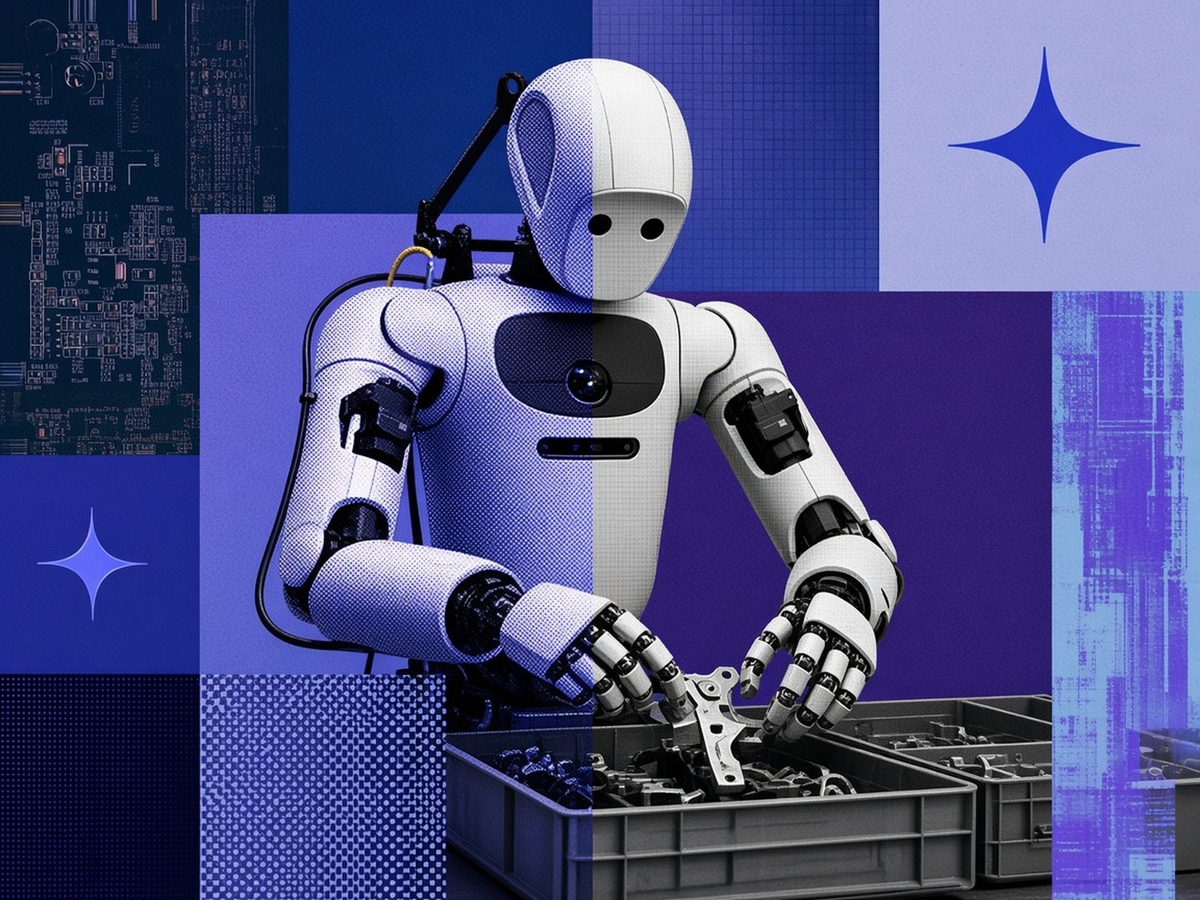
A vision-language-action model takes camera images and plain-language instructions and produces the arm and hand motions needed to carry out a task. DeepMind calls Gemini Robotics 2.5 its most capable model of this kind to date.
The model works with different robot bodies. DeepMind named Apptronik's Apollo 2, fitted with the five-finger SharpaWave hand, and the two-armed Franka Duo platform with parallel grippers.
DeepMind tested it on more than 200 separate tasks. Examples included serving food with tongs, tying a bow on a gift box and pipetting liquid.
Depending on the type of task, DeepMind said success rates were 30% to 100% higher than its previous baselines. Tasks were also completed 20% to 30% faster. These are DeepMind's own results.
Apollo 2 on Mercedes-Benz production lines
The headline test took place at Mercedes-Benz factories in Kecskemét, Hungary, and Sindelfingen, Germany. Apptronik's Apollo 2 humanoids performed automotive kitting, a repetitive job that prepares parts before assembly.
Each robot reached into bulk bins, picked out metal brackets and placed them in sequencing trays in the order a specific vehicle needs them. Gemini Robotics ER, DeepMind's embodied reasoning model, tracked the workflow. The new vision-language-action model controlled the robot's hands and arms.
DeepMind reported a 96% success rate and described the work as a proof of concept, not a production rollout. It has not published how many picks the figure covers or how cycle times compare with a human worker.
Mercedes-Benz already has close ties to Apptronik. In March 2025 the carmaker said it would make a low double-digit million euro investment in the Austin company, and it had been trialling Apollo robots in Berlin and Kecskemét.
Leadership on the launch
Jeff Cardenas is co-founder and chief executive of Apptronik, which he started in 2016 with colleagues from the Human Centered Robotics Laboratory at the University of Texas at Austin. He previously worked in Deloitte's technology consulting practice and holds a master's degree in technology commercialisation from UT Austin.
Cardenas said, "Pairing Apollo 2 with Gemini Robotics, we saw the models improve dramatically in just a few weeks of post-training and carry over to Mercedes-Benz production with very little drop-off."
Carolina Parada leads the work as vice president and head of robotics at Google DeepMind. She earned a PhD in electrical engineering at Johns Hopkins University and previously led camera perception for self-driving cars at NVIDIA.
Parada wrote that with Gemini 4 Argon, "the model can practice thousands of times in a virtual space, and even watch replays of its own mistakes to fix its technique and training recipes."
How Gemini 4 Argon sped up training
DeepMind credits much of the progress to Gemini 4 Argon, which it used as a simulation engine. From a single real camera scene, Argon can create thousands of varied practice runs and a digital twin of the setting.
Researchers combined those runs with real demonstrations so the robot adapted to new scenes and objects faster. Argon also helped the team study failure videos and test likely fixes.
Safety steering and a new benchmark
The vision-language-action model now uses reasoning at run time to steer around physical hazards. In DeepMind's tests, safe task completion rose by 33% around obstacles and by 43% around nearby people.
DeepMind is also releasing ASIMOV-Jailbreak, an open-source benchmark of prompts that hide unsafe requests. It said Argon resisted 99.5% of these attacks, compared with 82% for its earlier Gemini Robotics ER 2 baseline.
A strong base for factory robots
Car plants remain one of the largest users of automation. The International Federation of Robotics (IFR) said 542,076 industrial robots were installed worldwide in 2024, with the automotive industry taking 23% of them.
Europe alone had an operational stock of 821,384 industrial robots in 2024, according to the IFR's World Robotics 2025 report.
What comes next
Gemini Robotics 2.5 is rolling out to DeepMind's robotics partners. DeepMind has not given a date for wider access to the vision-language-action model.
Neither DeepMind nor Mercedes-Benz has said whether Apollo 2 will move from the pilot into regular kitting work.
The event
AUTONOMOUS 2027
The conference behind this reporting: April 13-14, 2027 at Pier 27, San Francisco. Two days of founders, engineers and investors building robotics and physical AI.