What to Expect at a Physical AI Conference
Going to your first physical AI conference? Here is what the talks, demos and networking are like, who you will meet, and how to prepare so the day pays off.
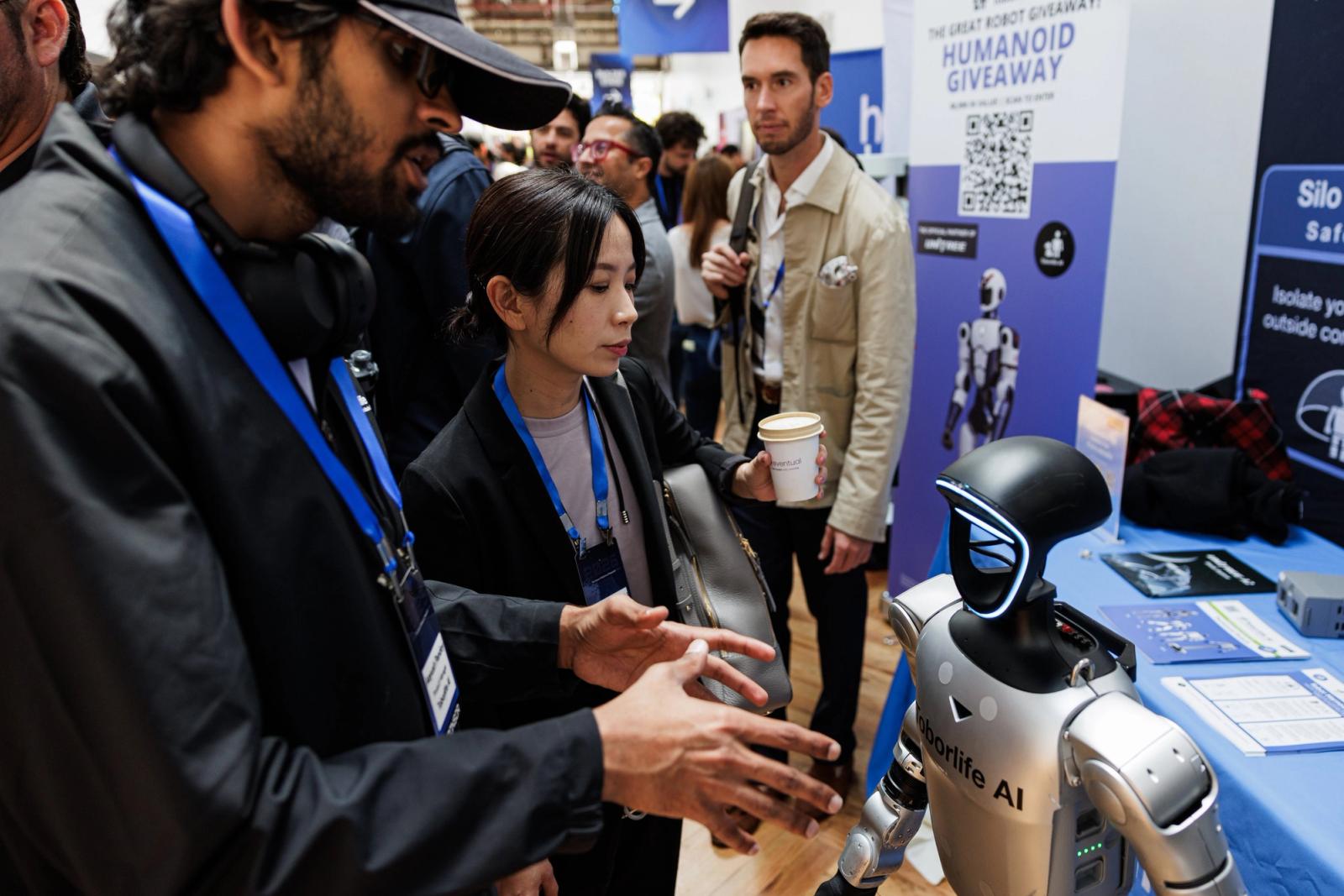
A physical AI conference is an event about AI that works in the real world: robots, self-driving vehicles, drones and the software that runs them. If you have only been to general tech or AI events, the first one can feel different. The people are more specialized, there are real machines in the room, and the conversations are about deployment, not just demos.
This guide explains what to expect at a physical AI conference, using AUTONOMOUS 2026, our robotics conference in San Francisco, as the example, and how to prepare so the day is worth your time.
What a physical AI conference covers
The program usually follows the big open questions in the field. Expect sessions on robot foundation models (one AI model that can control many kinds of robots), world models, humanoids, manipulation, and autonomy in trucking, farming, construction and manufacturing. There is almost always a session on funding, because investors are trying to work out which of these markets are real.
At AUTONOMOUS 2026, Skild AI's Deepak Pathak opened with the case for "one brain, any body", Wayve's Jamie Shotton spoke about world models, three trucking companies debated when the driver can leave the cab, and Foundation's Sankaet Pathak asked where humanoids are actually useful today. Our AUTONOMOUS 2026 recap covers the main takeaways. If the term itself is new to you, start with what physical AI is and why it matters.
The format: talks, panels and robots on the floor
Most of the day is keynotes, panels and fireside chats, often on more than one stage at once, so you will need to choose. AUTONOMOUS 2026 ran at The Midway with 60+ speakers across two stages and four tracks: the physical AI frontier, the humanoid moment, building and deploying robots, and where the money is going. AUTONOMOUS 2027 grows to two days, April 13 to 14, at Pier 27 in San Francisco.
You will also see robots in person. Companies bring working machines to the demo area, from robot dogs to robot arms, and seeing them move up close is one of the best parts of the day. A conference is not a trade show, though. The focus is on ideas and people rather than booths and sales. Here is how a robotics conference differs from a trade show.
Who you will meet
The crowd at a physical AI conference is a mix of:
- Founders building robotics and autonomy companies
- Engineers and researchers working on models, hardware and controls
- Investors looking for their next physical AI deal
- Operators and buyers from logistics, manufacturing, agriculture and other industries that want to use robots
AUTONOMOUS 2026 brought together 600+ attendees, with a strong investor presence. Because nearly everyone works in or around the field, most conversations are useful, which is rarely true at a broad tech event.
The hallway is half the value
Many physical AI conferences record their sessions. AUTONOMOUS posts its talks on YouTube after the event. That means you can watch any talk you miss later, but you cannot replay a conversation. Plan for it: leave gaps in your schedule, stay for the breaks, and talk to the people sitting next to you.
How to prepare
- Decide on one goal. Hiring, raising, finding customers or learning. One clear goal makes the rest of the choices easy.
- Read the agenda early. Pick your must-see sessions and accept that you will miss some. Recordings cover the rest.
- Make a short list of people to meet. Message them a week before and suggest a time.
- Prepare a two-sentence version of what you do. You will say it dozens of times.
- Wear comfortable shoes. You will walk between stages and the demo area all day.
- Follow up within two days. A short message while the conversation is fresh is worth more than a long one a month later.
Common questions
Do I need a technical background? No. Many attendees are investors, operators or in business roles. A basic idea of how robots sense, decide and act is enough to follow most sessions.
Is it worth it if robotics is not my main focus? It depends on how close your work is to the physical world. Our honest guide, is AUTONOMOUS worth attending?, explains who gets the most out of it and who should skip it.
The bottom line
At a physical AI conference you can expect focused sessions, real robots and a room full of people building the same future. Go in with one goal, protect time for conversations, and follow up quickly.
AUTONOMOUS returns to San Francisco on April 13 to 14, 2027, at Pier 27. Join the waitlist for first access.
Mentioned Skild AIFoundationWavye
From the conference



The event
AUTONOMOUS 2027
The conference behind this reporting: April 13-14, 2027 at Pier 27, San Francisco. Two days of founders, engineers and investors building robotics and physical AI.